www.rainierbank.biz            MAYFAIR  

Story Index                    

Karaka story page 1

Karaka (Corynocarpus laevigatus), is an evergreen laurifolia tree, of the family Corynocarpaceae, with large glossy leaves endemic to New Zealand, where it is widespread in mainly coastal situations, often forming a major component of coastal forest, although it is rarely a dominant tree. Sometimes Karaka occurs inland, usually the result of Māori plantings near former village sites.

You may not know, or wish to believe that the Karaka Tree is genetically engineered. Since my story begins with the Tuatara, who lived at the mouth of the Kaituna River in the bay of plenty, and who had a father who believed in God, and who swam out to Mayor Island, goes on to the arrival of the first Homo Sapiens at the end of the reign of the Neanderthol, and past that to the modern day when we all eat genetically modified soya beans from plants resistant to glyphosphate, it cannot be told in a single story, and it may be difficult to verify. It relies on a belief in, and trust in One God, and one Lord Jesus Christ.

There is a site at Papamoa where the family had a burial site. Recently there was a doctor's surgery there, and before that there was a house which was rented by two school teachers who attended
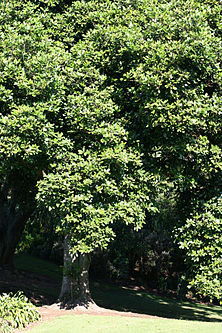
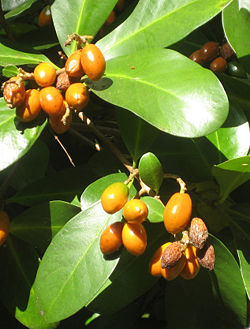
The toxicity of the fruit necessitates care when handling. This evergreen tree is a popular place for smaller birds to sleep in during the winter. It is of great value to birds and other fauna, including invertebrates that feed on their fruits and disperse their seeds. The fact to bear fruit in winter gives this plant a very important ecological value, being a good food source for many species, especially birds, at the station hard by the shortage of resources. These same fruits are considered toxic to mammalia. The seeds of Karaka also exhibit anitimicrobial activity against S. aureus and E.coli.


The pulp of the fruit is edible, although bitter, but the fresh kernels contain the lethal alkaloid poison karakin. Accounts from the 19th century record that extensive processing was used by Māori to convert the kernels to an edible form, and mention that if the processing was not done with the greatest care, poisoning would result with symptoms including violent convulsions and severe muscle spasms which could leave the limbs permanently fixed in contorted positions. Death resulted in a few cases.[7]

Karaka may be easily grown from fresh seed, but cuttings are very difficult to strike. Young plants are frost-tender and sensitive to cold. The tree will often naturalise in suitable habitats. It is common in cultivation and widely available for sale both in New Zealand and in suitable climates elsewhere. It is regarded as a serious pest species in Hawaii for native ecosystems.

On Chatham Islands this tree (local name - kopi) has played distinguished role in the history of Moriori people: the soft bark of these trees has been used for making dendroglyphs. In late 1998 there were remaining 147 known kopi trees with dendroglyphs[8].


Make a free website with Yola