


In my letter to the Minister of Information technology I outline my personal experience with the earliest versions of the internet.
"Later modems became internal and became browser software. There was a big legal battle between Microsoft and Sun over whose software JavaScript is/was. Microsoft lost but still uses (distributes) Internet Explorer which they say uses their language JScript, not JavaScript. (This is not correct, the court order prohibits them distributing their browser, which violates JavaScript copyright.) Sun owns JavaScript. but has been taken over by Oracle."
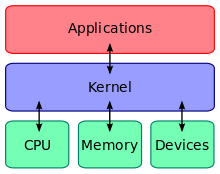
Not many people know that I also claim to have written Microsoft DOS-5 and the manual. This raises a number of issues, among them being software drivers which are supposed to have existed before DOS-5 was released. The DOS-5 manual is comprehensive, with country and keyboard codes, and switches which allow different computer manufacturers to incorporate their own unique software. NEC in Japan told Microsoft they had written their own version and released it two days before Microsoft released theirs, but capitulated under pressure from Microsoft. In fact Asian DOS has a different kernel, thus the world is split into two internet territories because both a browser and an operating system are needed to access the internet.
http://en.wikipedia.org/wiki/SRI_International,_Inc._v._Internet_Security_Systems,_Inc.#Prior_art
Prior art
According to 35 U.S.C. § 102(b), a patent is invalid if "the invention was patented or described in a printed publication in this or a foreign country or in public use or on sale in this country, more than one year prior to the date of the application for patent in the United States". Since the patent application was filed on November 9, 1998, prior art determination focused on the date of November 9, 1997.[4]
The opinions of this case concentrated on four prominent cases in the determination of a document as a "printed publication". In re Bayer,[8] In re Hall,[9] and In re Cronyn[10] were known as "thesis/library" cases and were used to define the boundaries of public accessibility of a printed document. The boundaries of public accessibility for a presentation were described in In re Klopfenstein,[11] which is referred to as a dissemination case.
http://en.wikipedia.org/wiki/History_of_the_Internet
The history of the Internet begins with the development of electronic computers in the 1950s. Initial concepts of packet networking originated in several computer science laboratories in the United States, Great Britain, and France. The US Department of Defense awarded contracts as early as the 1960s for packet network systems, including the development of the ARPANET (which would become the first network to use the Internet Protocol.) The first message was sent over the ARPANET from computer science Professor Leonard Kleinrock's laboratory at University of California, Los Angeles (UCLA) to the second network node at Stanford Research Institute (SRI).
Packet switching networks such as ARPANET, Mark I at NPL in the UK, CYCLADES, Merit Network, Tymnet, and Telenet, were developed in the late 1960s and early 1970s using a variety of communications protocols. The ARPANET in particular led to the development of protocols for internetworking, in which multiple separate networks could be joined into a network of networks.
Commercial Internet service providers (ISPs) began to emerge in the late 1980s. The ARPANET was decommissioned in 1990. Private connections to the Internet by commercial entities became widespread quickly, and the NSFNET was decommissioned in 1995, removing the last restrictions on the use of the Internet to carry commercial traffic.
Since the mid-1990s, the Internet has had a revolutionary impact on culture and commerce, including the rise of near-instant communication by electronic mail, instant messaging, voice over Internet Protocol (VoIP) telephone calls, two-way interactive video calls, and the World Wide Web with its discussion forums, blogs, social networking, and online shopping sites.
http://en.wikipedia.org/wiki/JavaScript
JavaScript is a prototype-based scripting language with dynamic typing and has first-class functions. Its syntax was influenced by C. JavaScript copies many names and naming conventions from Java, but the two languages are otherwise unrelated and have very different semantics. The key design principles within JavaScript are taken from the Self and Scheme programming languages.[6] It is a multi-paradigm language, supporting object-oriented,[7] imperative, and functional[1][8] programming styles.
On the client side, JavaScript was traditionally implemented as an interpreted language but just-in-time compilation is now performed by recent (post-2012) browsers.
The application of JavaScript in use outside of web pages—for example, in PDF documents, site-specific browsers, and desktop widgets—is also significant. Newer and faster JavaScript VMs and platforms built upon them (notably Node.js) have also increased the popularity of JavaScript for server-side web applications.
Today, "JavaScript" is a trademark of Oracle Corporation.[31] It is used under license for technology invented and implemented by Netscape Communications and current entities such as the Mozilla Foundation.[32]